Skip to content

The Chapter 1 V2 in 1940s Japanese Denim (Straight Fit)

Sale price $215.00

Size
Inseam

RELEASING APRIL 15th at 8pm EDT for Pre-Order. Estimated ship date is 06/01/26.

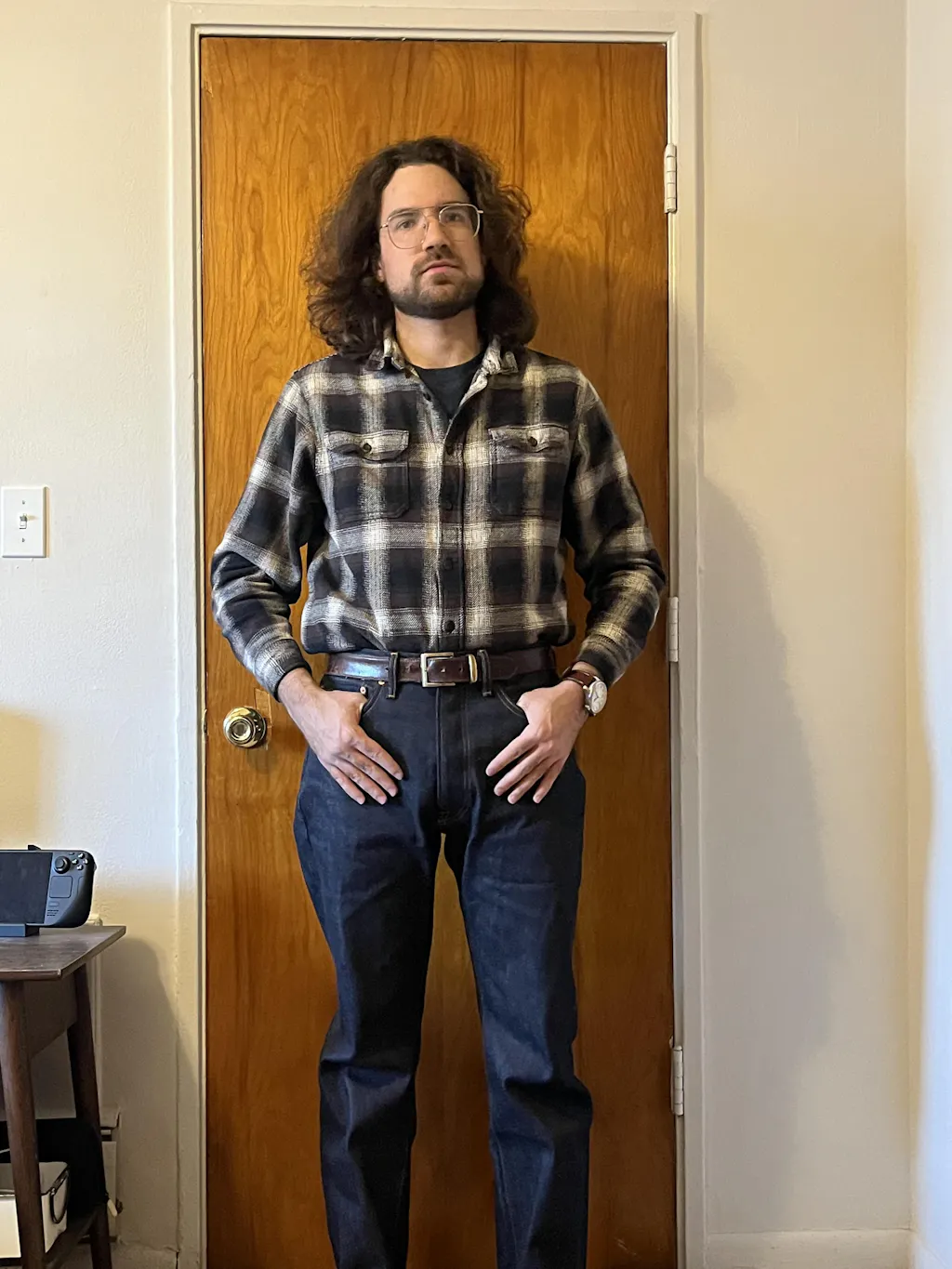
Finally, we’ve plunked our spade into the topsoil of Planet Pants. These are our Chapter 1 jeans: straight fit, high rise, cut and sewn in the USA from 13.3oz Japanese denim specifically mimicking the characteristics of denim in the 1940s. These jeans come out of the gate raw; if you’re new to the world of raw denim, their rigidity might surprise you. Don’t fret—after a few wears, they’ll soften up, lose their stiffness, and begin to form to your body.

These jeans will fade uniquely to your body and only look better over time. The indigo will lighten and chip, the hems will fray, and the Chapter 1s will become a piece of art. This denim is particularly sneaky, seeming a bit plain at first, and really popping after a wash. Toss these on, forget about them, and go do something you’ve always wanted to do. That’s the dream, anyway.

As always, please check our sizing guide. All brands will fit differently! These will shrink around 2–3% after their first wash and line dry. They’ll stretch back out to their original form only at points of stress. Note: we've added an extra bit of length (~1") to these jeans for their first wash shrink. Order your normal inseam and after a cold wash they'll hit the labeled inseam.

Snail Streamline Icon: https://streamlinehq.com

What is our Primordial Line?

You’re currently viewing our Primordial line of clothing. With the Primordial line comes more premium fabrics, details, and features that far exceed the grade of standard garments. In the case of our Chapter 1s, we are using 13.3oz Japanese selvedge denim and densely woven, 100% ELS cotton moleskin pocket bags.

Selvedge denim is made via a shuttle loom and is a self-finished fabric, meaning it doesn’t fray in its unsewn state. It’s typically hallmarked by a white selvedge line at the fabric’s edge. Selvedge denim is much slower to produce and only comes in half-width (a roll of fabric is half the width of what’s more commonly used today), which means it’s typically around four times more expensive than its wide-width, non-selvedge counterpart, although prices can vary greatly. Selvedge denim harkens back to the old days of denim making but stopped being the dominant denim in the 1980s when the far more efficient projectile loom took over. However, a slower, lower-yielding process that produces a cleaner and more interesting product naturally attracts craftsmen and artists, particularly in Japan—though fantastic denim is made worldwide. Japanese denim mills originally set out to create perfect recreations of vintage, hard-to-find denim, but soon the culture morphed beyond recreation into an art form. Now, selvedge denim is where we find crazy textures, heavier fabric weights, fascinating dyeing techniques, obsessive attention to detail, and of course, a cleaner, more finished look. The world of selvedge denim is a rabbit hole! Welcome to the party!

Our ELS Cotton Moleskin Pocketbags feel and shine like silk, although, they are not. They are cotton. There is an age-old problem the world is lazily trying to solve: holes in pockets. There must be a million ways to do it; some involve moving seams, others involve using ballistic nylon. Our way involves extremely dense and high-grade cotton (this time around).

Specs at a Glance

- 13.3oz 1940s recreation Japanese Selvedge Denim
- Made in USA
- Leather Patch from Wickett & Craig
- 100% ELS Moleskin Pocket Bags
- Button Fly
- Straight Fit

Loading image:

The Tale

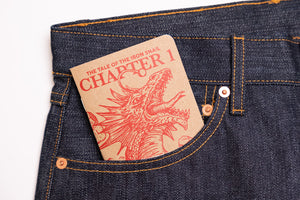
Each and every piece made by The Iron Snail comes with its own tale, hence The Tale of The Iron Snail. Chapter 1, of course, is where it all begins—preceded only by our Prologue Denim Jacket. Your Chapter 1s will come with a small booklet — contained in the booklet is, of course, Chapter 1, but also, a care guide on how to best treat your jeans.

Loading image:

The Densley Woven ELS 100% Cotton Moleskin Pocket Bags

What a mouthful. Tagging along with the Chapter 1 jeans are two pocket bags made from 100% ELS cotton. On the last iteration we used 100% hemp, and while we still plan to use it again, it needed a bit more refinement. That said—hemp set the bar very high. It’s strong, unique, and frankly, neat.

So we went hunting. Sifting through hundreds of fabrics until we landed on this: a densely packed moleskin built to last a lifetime.

To break it down: extra-long-staple cotton—some of the highest quality, strongest cotton out there. The longer the fiber, the more strength, shine, and softness you get. We paired that with an ultra-dense moleskin weave for serious pocket durability.

Finally, since the 1940s saw a mix of fabrics used for pocket bags due to WWII shortages, we figured we’d go a little against the grain and make these an emerald green.

Loading image:

The Denim

The Chapter 1 jeans use a 13.3oz Japanese selvedge denim. As previously stated, this denim has some rigidity to it but it’ll soften, fade, and mold to your body beautifully over time. At first, this denim may appear rather uniform, however, after a quick stop in your laundry machine and/or bathtub, it explodes with character. Trust me on this one!

Loading image:

The Leather Patch

Our leather patch comes from Wickett & Craig out in the great state of Pennsylvania.

Mr. Harker was on the case for our patches for the first time this year and we did some overhauling. The rounded the corners to protect them from bending, added stitch channels to protect the sewing, and gave the sides a handsome little burnish. All in the name of trying to look better for longer.

Condition the patch regularly, be wary of machine drying your pants, and let nature take its course. The patch will develop a gorgeous patina over time that’ll only get better and better.

Loading image:

The Back Pocket Embroidery

First started in the 1800s, by a brand that rhymes with “wee thighs,” a unique back pocket embroidery is a must for a pair of jeans. We opted for a dark blue thread for this batch to keep things subtle. As your denim fades this line of stitching will subtly begin to reveal itself. We’ve opted for a slightly lighter blue thread than the denim in an unwashed state to allow the thread to color better to match the denim after its first wash.

Note: it’s VERY subtle and thus, a bit tough to photograph.

Back to top